
Cultivating BiodiverCity and Climate Resilience - july
© guy_dugas via pixabay
Written by: Ciera Cleary, Noa Gafni, Maryam Ali, and Felicia Mikrogianakis
Happy summer, EcoSpark community! We are looking forward to a season full of opportunities to rest, relax, and reconnect with nature. Here’s what some of our animal, plant, and fungus neighbours are up to this month!
Birds
July lands us solidly into the summer months, which marks a quieter time for the birds – both literally and metaphorically. By this time, birds that were passing through during the spring migratory period are now farther north, and the birds that are still here tend to keep a lower profile. By July, mating season is long over and so birds no longer need to sing to attract a mate. Most baby birds have fledged and left the nest, so there is no need for their parents to continue loudly defending their territory. In fact, some birds join flocks for the summer months, so territorial singing isn’t compatible with their summer behaviours.
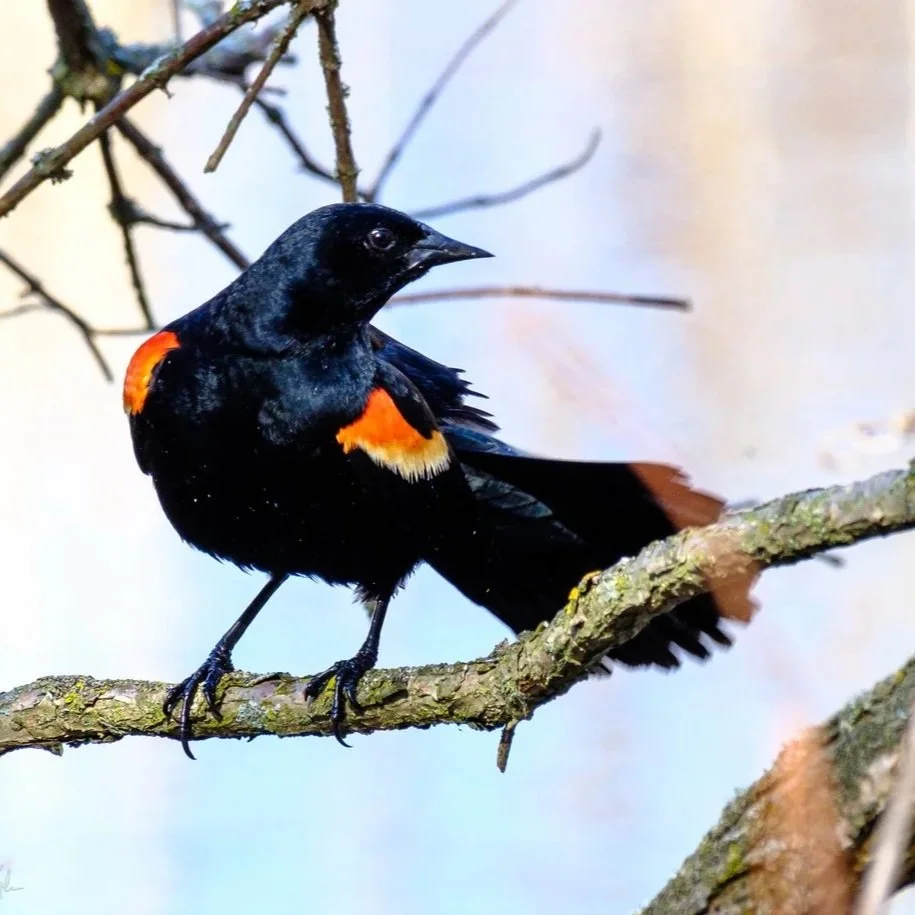
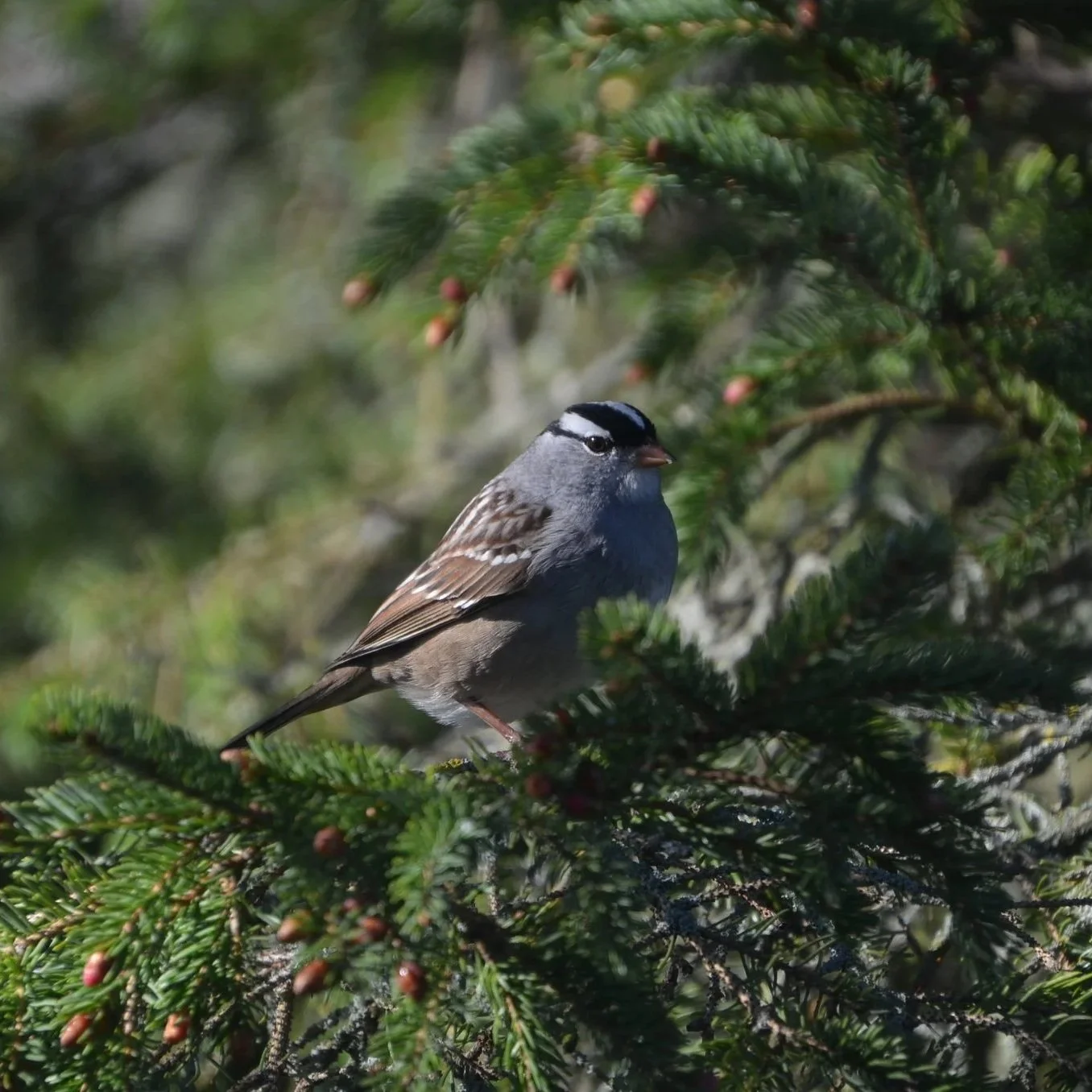
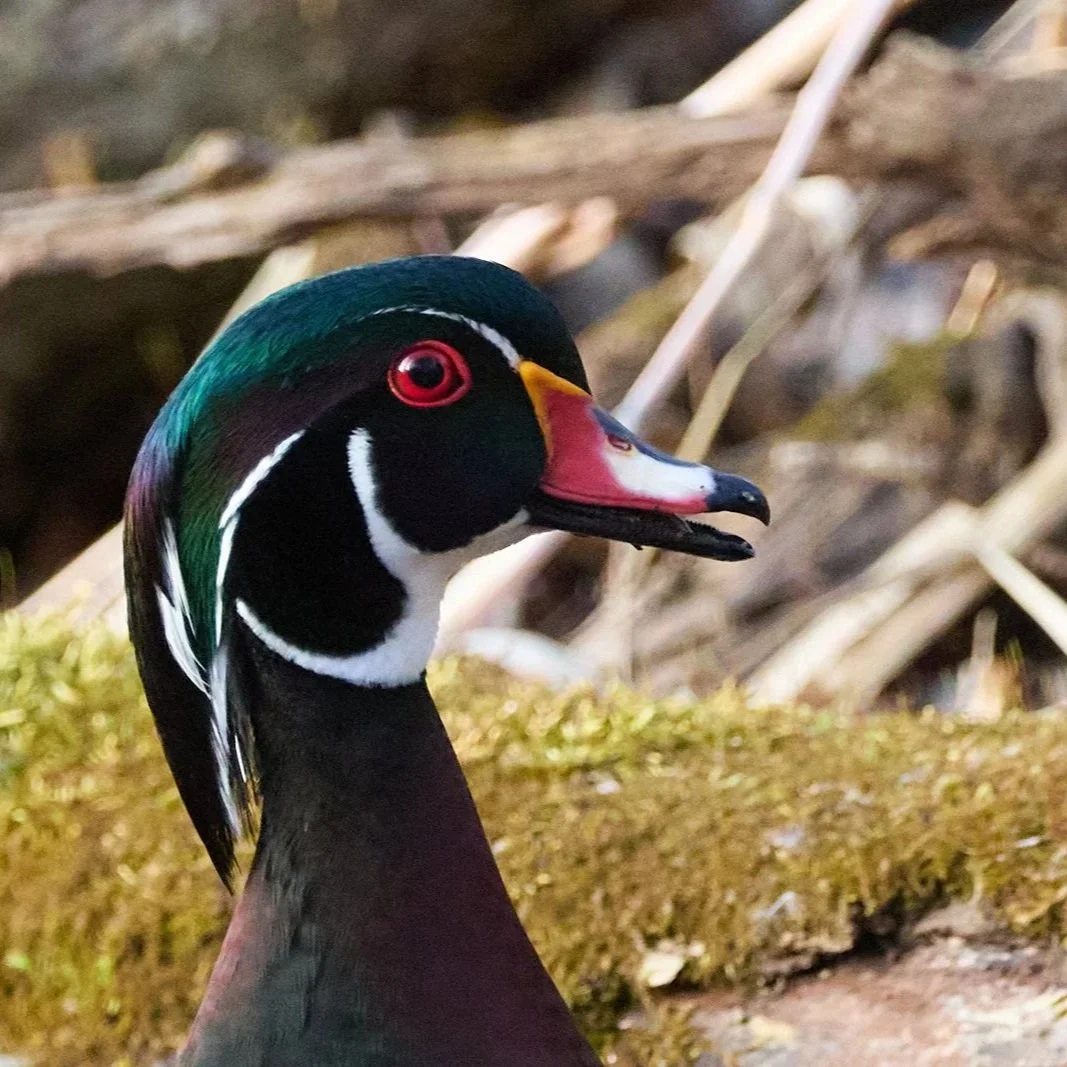
But never fear: for the keen birder, there are still lots of birds to be seen, you just might have to look a little harder. Red-winged Blackbirds, Common Grackles, and American Robins are still around and easy to spot! 6 different species of sparrows are among the most common birds to spot this month in Toronto: the House Sparrow, the Chipping Sparrow, the American Tree Sparrow, the Fox Sparrow, the White-crowned Sparrow, and Song Sparrow. If you get a chance to take a walk around High Park’s ponds this summer, look out for the striking Wood Ducks, which have been calling these ponds home in the last few years.
Mammals
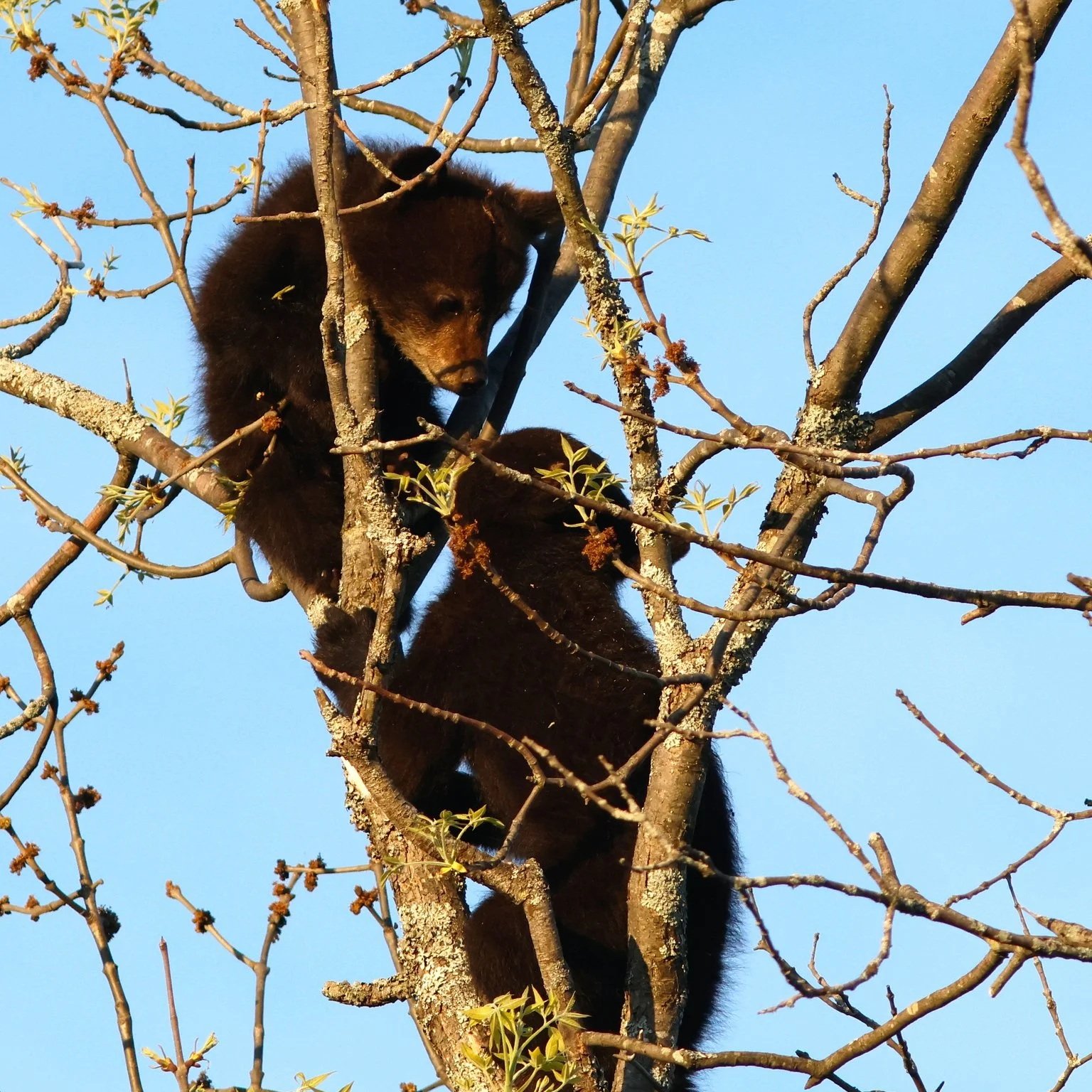
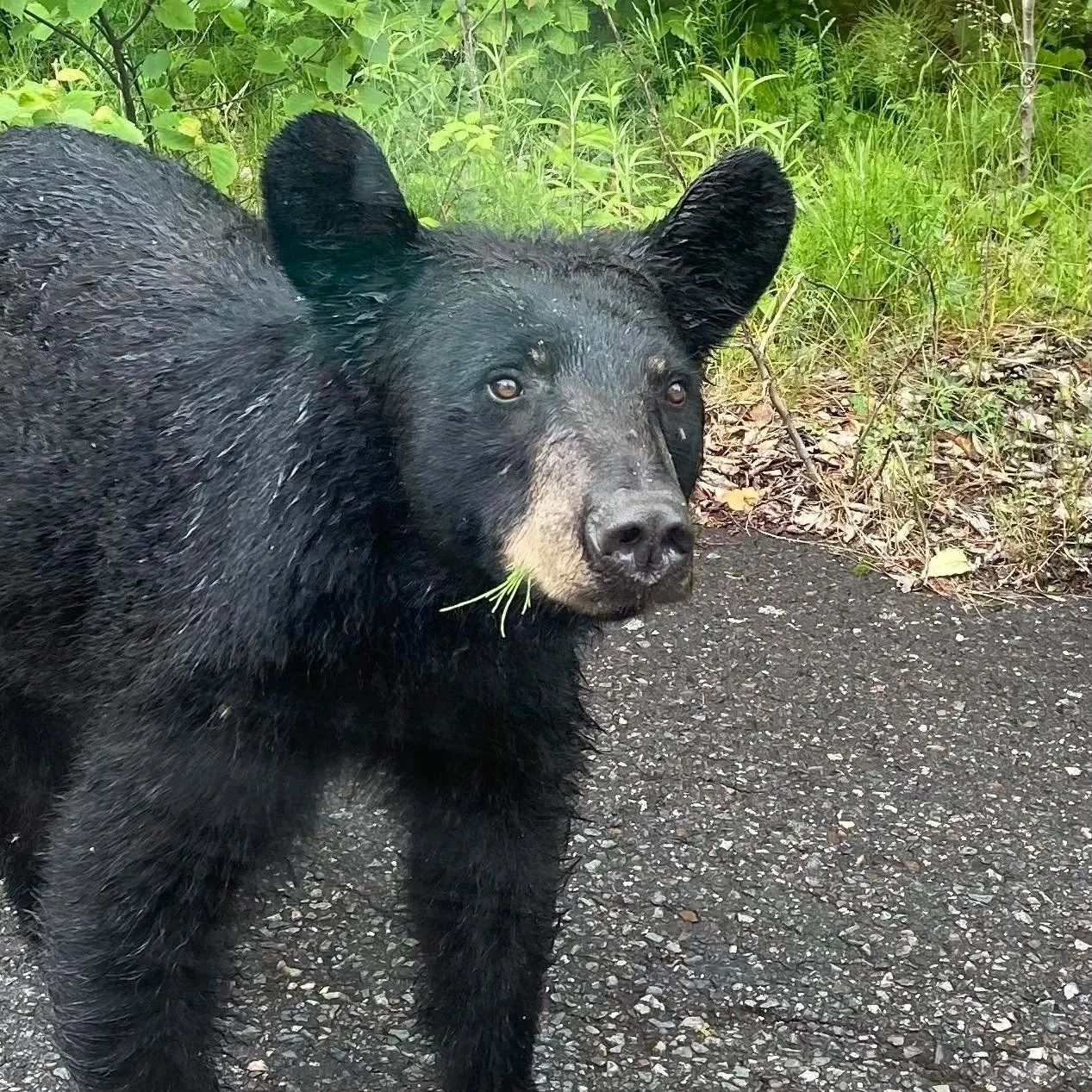
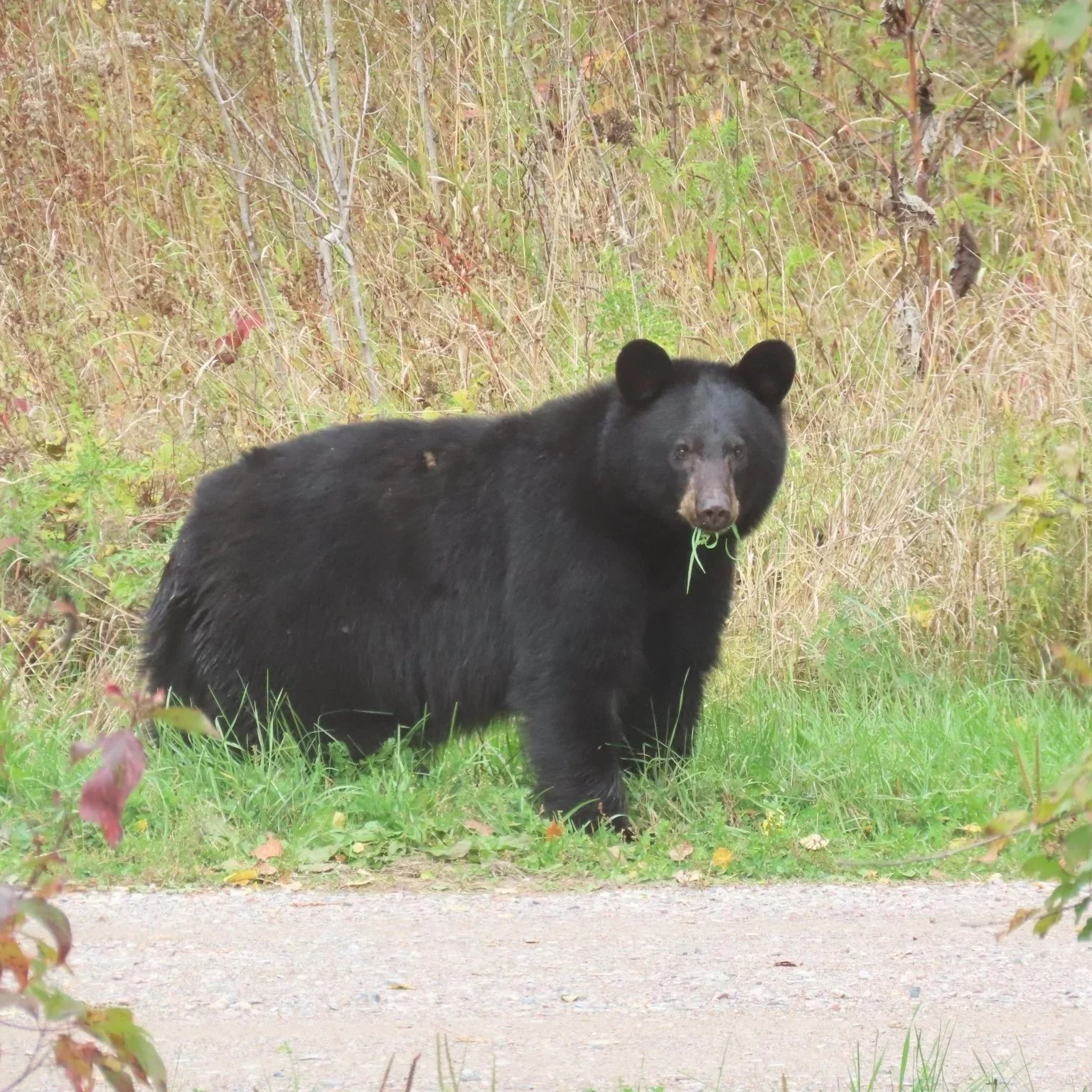
School is over and camping season has just begun, which begs the question…what are the bears doing in July? For the American Black Bears, mating season is wrapping up, and feeding season begins. Though they are big and can be dangerous, an American Black Bear’s diet consists mainly of small things – berries and insects. Because of their big warm coats, bears are mostly active at dawn and dusk, though you can definitely spot them at other times – most of their day is spent eating! In July, bear families are out and about – baby cubs are about the size of a raccoon at this time. If you go camping, make sure to store anything that might attract a bear in bear-proof storage, and read up on avoiding bear encounters on Ontario’s website!
Reptiles & Amphibians
Climate change and habitat loss due to anthropogenic causes are the driving forces of declining reptile and amphibian populations worldwide. In Ontario, three quarters of reptiles and one third of amphibians are on the national or provincial lists for species at risk. Frogs are especially threatened by several types of birds in the GTA including wading birds, waterfowl, birds of prey, and smaller birds such as Kingfishers, Gulls, Grackles, and Blue Jays.
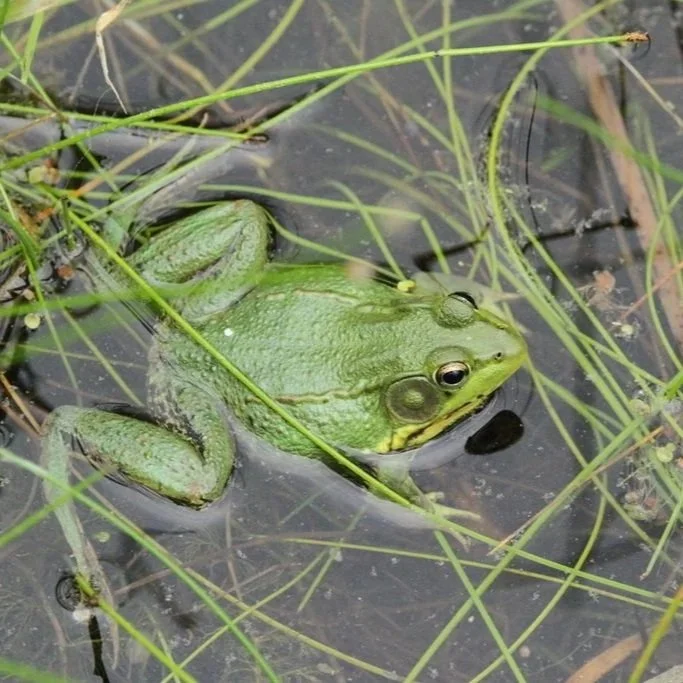
Named aptly after their green heads, the Green Frog is a frog native to eastern North America. Throughout July, they can be spotted in ponds or wetlands throughout as the warmer temperatures set in. These frogs particularly enjoy warm standing water, where the females can lay up to 5000 eggs. It typically takes Green Frog tadpoles two years to fully mature. These frogs can be easily identified by two ridges along either side of their backs. Their eardrums, which can be brown, green, or olive, are another characteristic that might stand out just below and behind their eyes.
Variations in climate can easily disturb the sensitive Green Frog, especially affecting their breeding phenology — a term used to describe the timing of the life cycle. Habitat destruction is another threat to the reproductive cycle of the Green Frog, emphasizing the importance of conservation of Ontario’s wetlands.
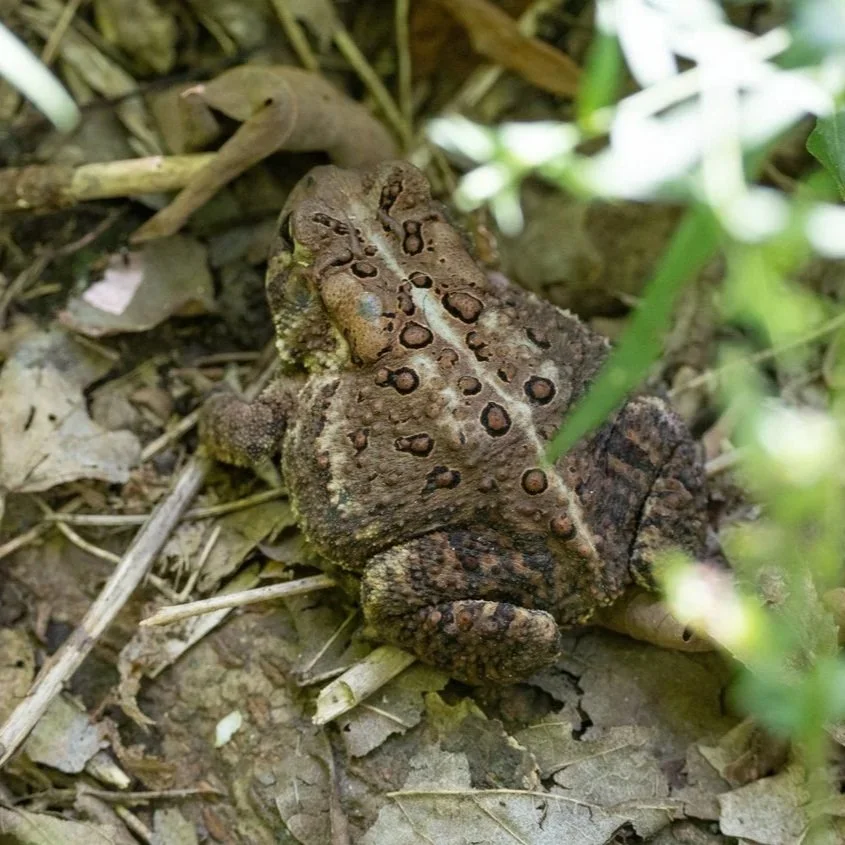
The American Toad is another amphibian that is very active this month. Found throughout the Eastern provinces and states, this native toad species is divided into three subspecies: the eastern American toad, the dwarf American toad, and the rare Hudson Bay toad. These large toads are characterized by brown, reddish, or olive skin with dark blotches containing a couple of spots, commonly referred to as warts, of various colors. Adults can grow up to 11 centimeters long, have a white belly with dark spots and a light line down their backs, while tadpoles are fully black in color. The American Toad can lay anywhere from 2,000 - 20,000 eggs which typically hatch within 3 - 12 days and take 50 - 65 days to fully mature. Each male American Toad has a different note in its breeding call, which can be used to help distinguish the different subspecies during the breeding season.
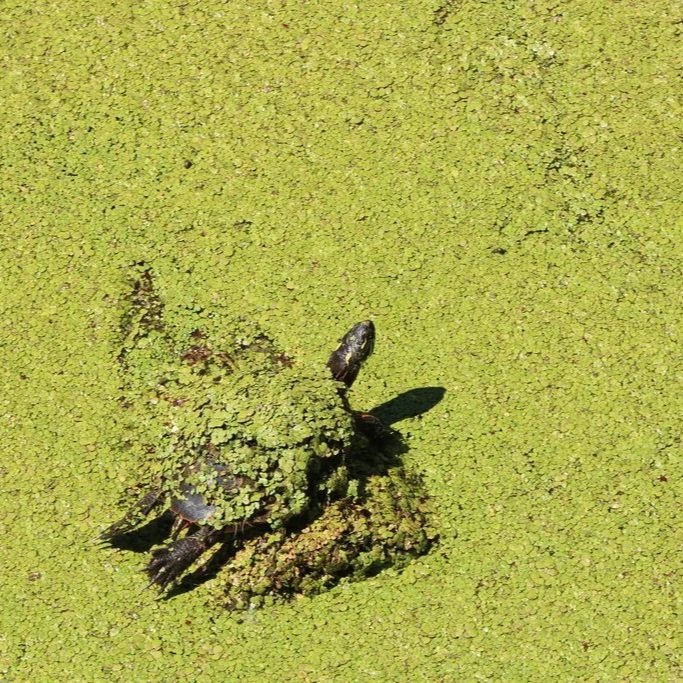
Similar to the Green Frog, the American Toad can be found hanging out in shallow, warm water, as well as a variety of grasses and forested areas during the summer months before they move toward terrestrial habitat for the winter. You might encounter American Toads in your backyard pond or garden, especially in areas where nighttime lights attract delicious insects for them to eat. These toads are less vulnerable to land use changes and environmental disturbances compared to the Green Frog as they have evolved to become habitat generalists, meaning that the loss of a specific habitat does not tend to adversely impact these toads. Meanwhile, various species of snakes and turtles are observed across the GTA this time of year, with the most common being the Painted Turtle, Common Snapping Turtle, and Garter Snake. The Painted Turtle and Common Snapping Turtle are the most widespread turtles in Southern Ontario and are native to North America. These two species spend most of their time in slow-moving fresh waters such as wetlands that have plenty of emergent vegetation. The Painted Turtle can be identified by its dark and smooth top shell and its olive-black skin with red, orange, or yellow stripes on its extremities. Adult males tend to be smaller than females, ranging anywhere from 13 to 25 cm long. The Common Snapping Turtle is notoriously known for its combative temper when on land, exhibited by its sharp jaws and highly mobile head and neck. However, they display a totally different temperament while in the water where they are likely to hide underwater beneath sediment. These turtles can take up to 20 years to fully mature, and can live past 100 years in the wild. Once turtles reach the adult stage, their shells largely protect them from predation, with the exception of foxes, raccoons, and coyotes. You might see these turtles lying around on warm logs or rocks. Just like us, they love to soak up the sun!
Trees & Shrubs
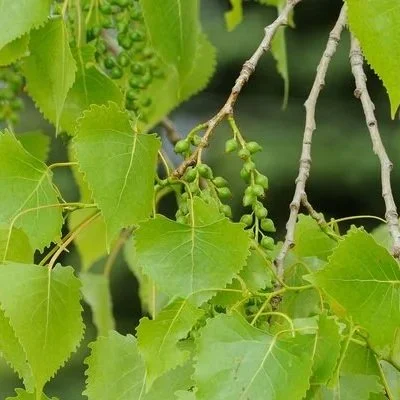
By July, the landscape around Ontario and Toronto is at its greenest and fullest. You will see trees like the Basswood, with its fragrant blossoms, attracting a variety of pollinators with their scent. Different trees rely more on scent, while others use different flower shapes and more visual cues to attract pollinators. Strong smelling flowers can help pollinators find flowers from farther away, even before the blooms are fully visible. As pollination continues into the evening, these scents help some of our nocturnal pollinators too! Seed dispersion is also noticeable during this time, with the Eastern Cottonwood releasing its characteristic fluffy white seeds, while maple trees produce winged seeds that spin as they fall. Both are carried by the wind, which helps the seeds travel farther away from the parent tree and grow in different locations. Some shrubs like the Common Elderberry (Sambucus canadensis) and Serviceberry start developing its fruits, which are used by many organisms in our urban ecosystems. This is another form of seed dispersal, where animals eat the fruits and move the seeds to new locations.
However, as we near the end of July and experience warmer temperatures, trees start to slow their growth and instead of spending energy growing new leaves, they focus on preparing buds for the following year.
Wildflowers
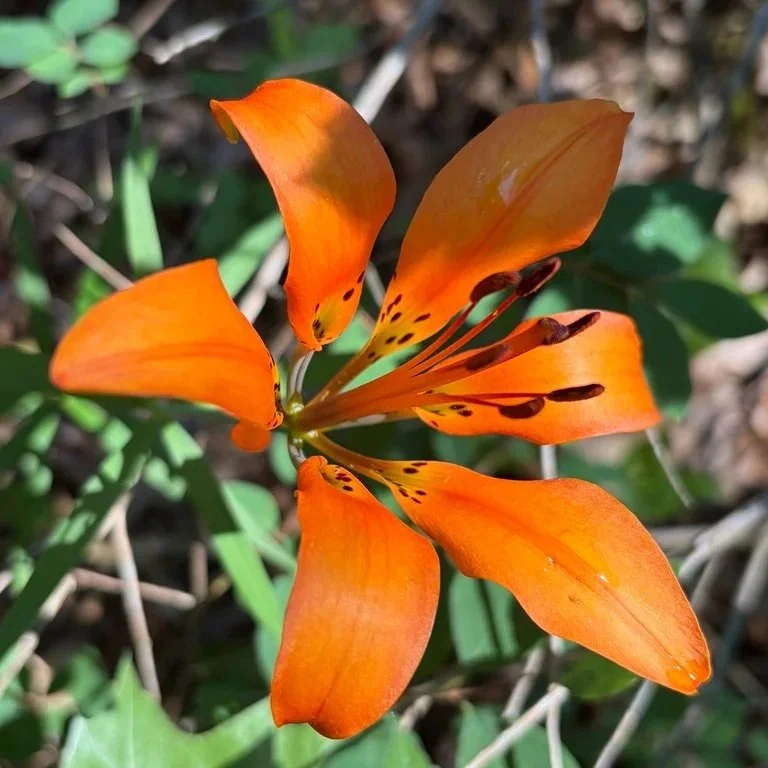
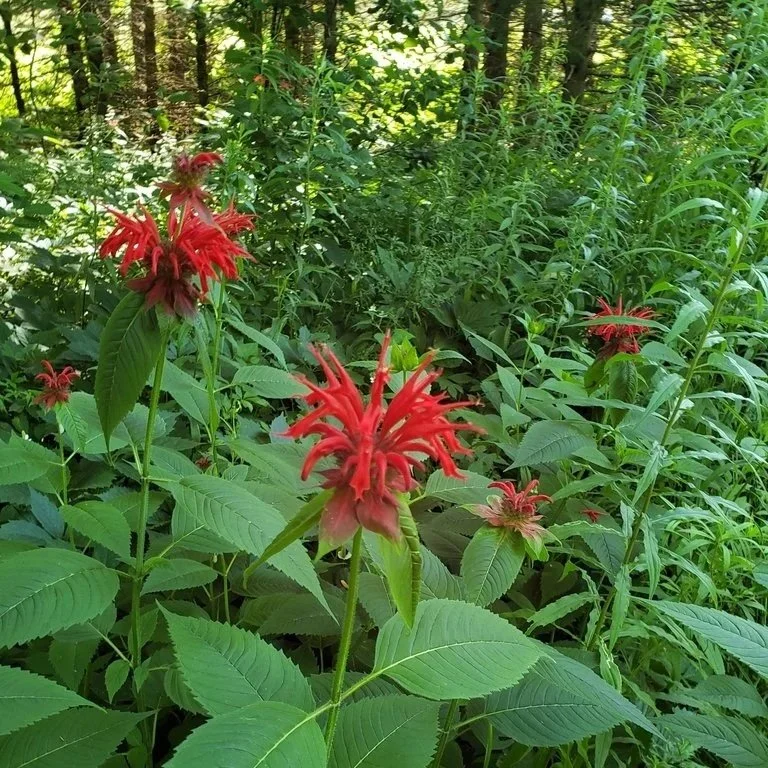
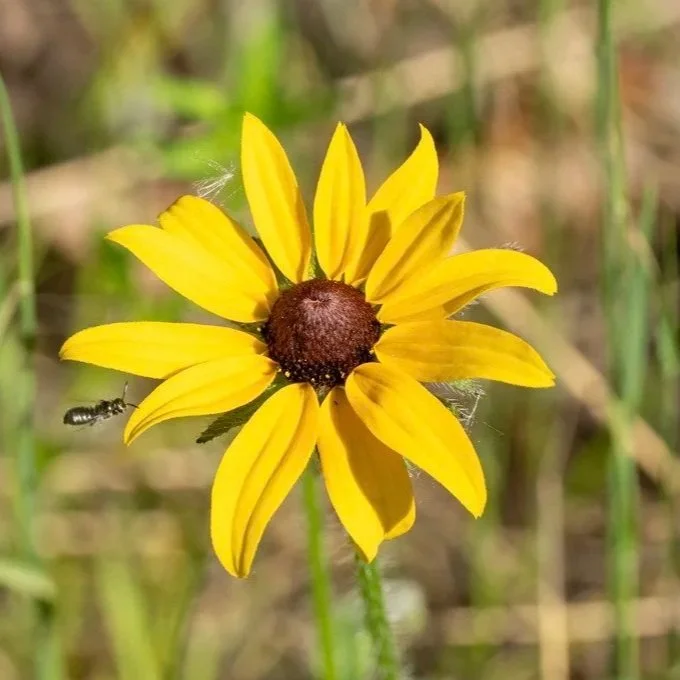
The beginning of summer brings new wildflower blooms to enjoy! Three native wildflower species that will be blooming soon are Wood Lilies, Bee Balm, and Black-Eyed Susans. Wood Lilies are a striking orange-red lily that can bloom in a range of habitats. The Wood Lily, also called the Prairie Lily, is the provincial flower of Saskatchewan. Unfortunately, because of habitat loss and overharvesting, the Wood Lily has become rather rare in some parts of its natural range. Bee Balm, also known as Wild Bergamot, are a group of flowering plants classified under the genus Monarda. Several species are native to Ontario, including Monarda didyma, or Scarlet Bee Balm, which is a vulnerable species in Canada. Its bright red flowers are a great food source for hummingbirds. Black-Eyed Susans are a common plant spotted in gardens around the GTA. They are native to much of Eastern and Central North America, and outside of the garden, they thrive in sunny, dry areas including fields, prairies, and roadsides. Native wildflowers like these make a low-maintenance addition to any garden, and cultivate biodiversity by supporting pollinators!
Fungi
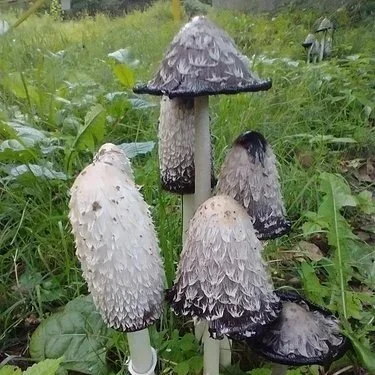
As summer settles across Ontario, we start to see the emergence of certain fungi including the Coprinus comatus, or more commonly known as the Shaggy Mane. This distinctive mushroom, which you may have already seen around Toronto, is recognizable by its shaggy, almost feather-like appearance. As this mushroom develops, it undergoes a process called deliquescence, where the cap (or top) of the mushroom begins to turn black, soft and fluid-like, before gradually breaking down.
Another well known mushroom that may begin to appear throughout late July is Amanita muscaria, also known as the Fly Agaric. This gilled mushroom can be found around Toronto, and is described as having a very “storybook” appearance, with its bright yellow/orange caps and white spots. Interestingly, gilled mushrooms are significant parts of many cultures and traditions around the world! In some folklore, an abundance of mushroom growth has been interpreted as a sign of changing environmental conditions or an upcoming disturbance.
However, it is important to know your mushrooms, as Amanita virosa, although part of the same genus as the Fly Agaric, is highly toxic. It can be identified by its all white appearance and should be avoided!
Insects and Arthropods
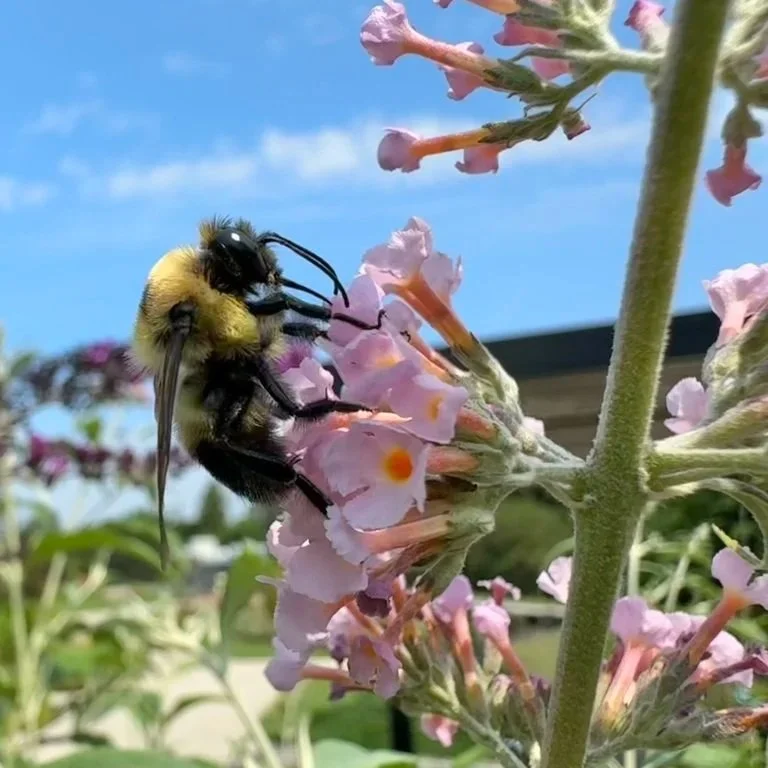
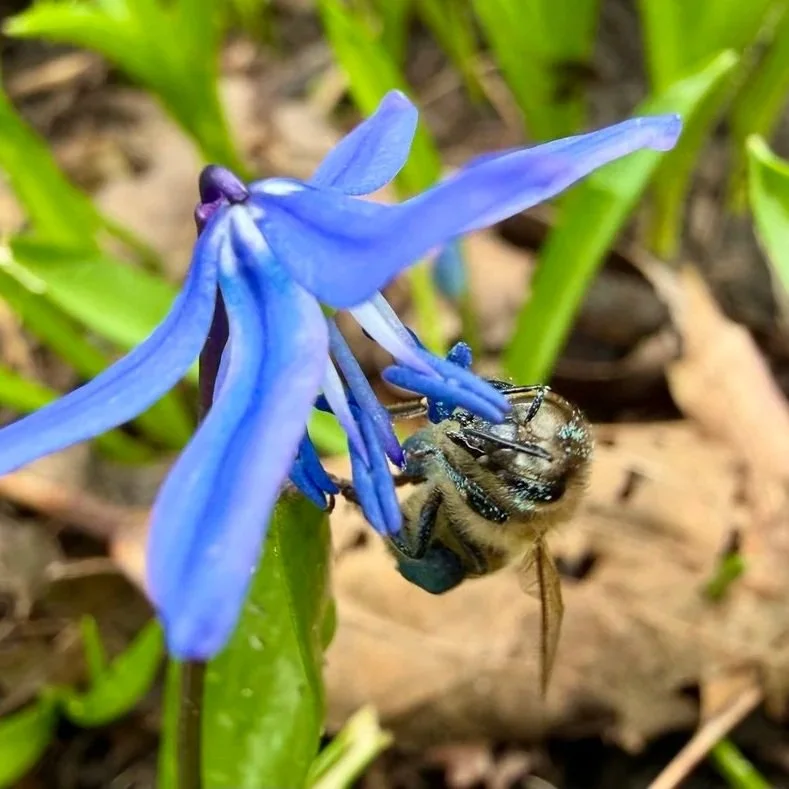
While we might be inclined to avoid insects and bugs this summer, these creatures play a crucial role in the food web of our ecosystem. Birds, bats, frogs, and toads rely on insects and arthropods as a primary food source. This is especially true for the more than 500 species of birds that either migrate to or reside within Southern Ontario throughout the year. As the summer stretches open, we can expect to see many species of bees, beetles, butterflies and moths. Throughout this month, the native Brown-belted Bumble Bee tends to be the most commonly observed species of bumble bee in Toronto. The European Honey Bee is an introducpecies that is also very common and can be found on every continent with the exception of Antarctica. The European Honey Bee was one of the first insects to be domesticated for honey production and pollination of plants, and continues to be the preferred species for beekeeping. To learn more about urban beekeeping, check out resources offered by the Toronto Beekeepers Collective, or even try out their hands-on beekeeping experience.
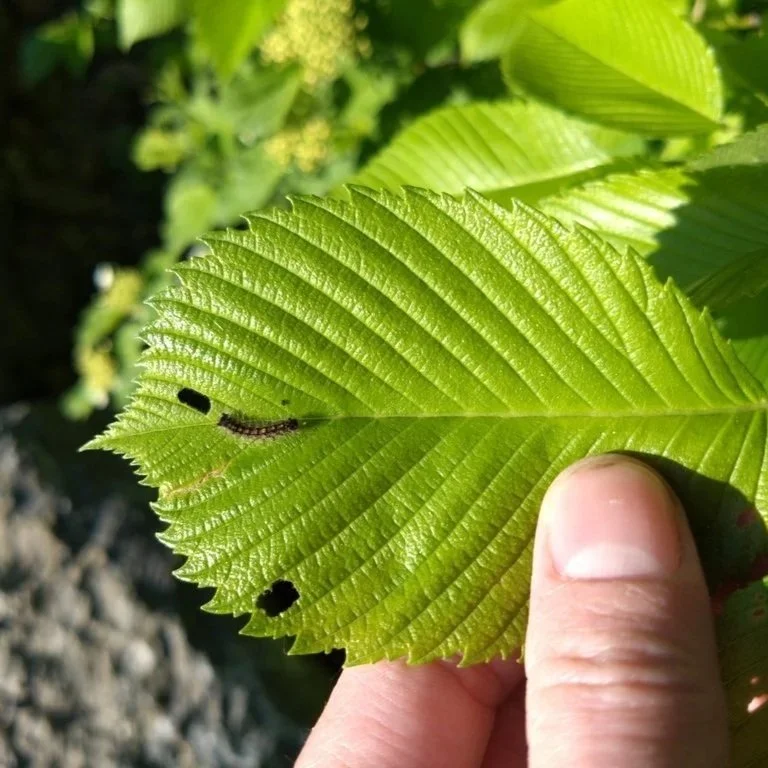
July also brings an abundance of butterflies and moths, such as the beloved Monarch, Red Admiral, and Black Swallowtail. While the geographical range of the introduced European Common Blue has expanded recently, there has been a 15% decline in their distribution over the past 50 years. The Spongy Moth, another introduced species, is known to defoliate forest canopies of oak, maple, poplars, willows and other broadleaf trees, and can result in severe ecological damage. Outbreaks tend to occur every 7 - 10 years, however, climate change has contributed to longer cycles of infestation. The recent 2022 outbreak of Spongy Moth affected over 55,000 hectares of forested areas in Southern Ontario. The Japanese Beetle is another forest pest that can decimate tree canopies and a host of other plants this time of year. When gardening, keep an eye out for signs of these beetles on your bean, strawberry, tomato, pepper, and pea plants, as well as various fruit trees. See this guide on how to manage such invasions.
Finally, be prepared to encounter more mosquitoes than usual this summer. The cool, wet spring months served as ideal conditions for mosquitos to lay eggs, and now the summer months will be when the hatching season occurs. Protect yourself by using a repellant, avoiding standing water, and covering your skin, perhaps with two layers of clothing!
Upcoming Events in July!
Ongoing: TRCA conservation youth corps – Calling all high schoolers! Earn up to 30 volunteer hours assisting conservation projects across the GTA!
Ongoing: Weedy Wednesdays at High Park – Free gardening program where participants take part in caring for the high park gardens
Ongoing: Eco library talks and tours – further description on the City of Toronto events calendar!
Ongoing: Community Environment Days – connect with your community at your local park and drop off household items for donation, electronics for reuse or recycling and household hazardous waste for proper disposal
July 2: Art in the Parks @ R.V. Burgess Park – Spend some time engaging in a series of nature walks and art activities, which will lead to the creation of a collective installation, the Spiral of our Relations
July 4-5: Learn to fish at Biidaasige Park – a 2 hour free registered introductory program that teaches you everything you need to get started fishing sustainably and safely!
July 10: Wigmore Park Urban Forestry Nature Tour – 1.5 hour free registered tour that focuses on native plants and the local ecology at this park
July 12: Summer Birding Walk in High Park – meet some of the summer birds of high park at this PWYC beginner-friendly birding hike – binoculars provided!
July 14: Join Our Kids Welcome Call Online – Join a community of parents and grandparents who care about climate change and want to make a difference in their communities
July 15: Summertime Frogs walk @ Oak Ridges Trail – free registered event where you can learn about Ontario’s frogs and toads and how to identify them by their unique calls!
July 20: Moth Night @ High Park - Learn about the 1,000+ moth species that call High Park home at this PWYC nighttime event!
July 29: TRCA Youth Council virtual town hall – Learn about the Humber River Watershed Plan being developed and make your voice heard!
HAGS!!!
The EcoSpark Team
Your monthly observations contribute essential data for understanding Toronto's urban biodiversity patterns. Record your findings on iNaturalist to support ongoing research into phenology, species distributions, and ecosystem relationships within our urban environment. However, please be aware of human and wildlife safety at all times and explore natural areas responsibly with ethical wildlife photography.