
TeachER Resources
EcoSpark provides high-quality curriculum connected materials to support our hands-on citizen science programming. Enhance your academic professional development with the materials below and download resources that will enrich student learning.
Preparing For Your Session

Must be emailed or submitted at the start of the session. Students without a signed form should be indicated to staff so they are not included in photos.
Photos are greatly appreciated because they help our not-for-profit share activities with funders and other classes.
Outdoor Safety and Comfort

Outdoor Learning Safety Considerations
Citizen science encourages students to explore the outdoors in new ways. EcoSpark goes beyond following school board guidelines and policies regarding outdoor education and introduces all students to the basics of safely exploring the natural world around them. We review school board guidelines and policies regarding outdoor work.

What to Wear for Outdoor Learning
Learn how to dress in different types of weather to thrive outside, including warm weather, cold weather, and rain.
School Watch Resources

School Watch introduces students, grades 6 to 12, to the world of citizen science through curriculum-linked classroom and on-site activities, customized to suit your curriculum needs.
The School Watch guide provides teachers with the information to get started and step-by-step directions to conducting citizen science projects on school grounds. It includes projects to monitor pollinators, measure tree canopy, and explore wildlife habitat. It also helps students reconnect to the natural world around them.

EcoSpark’s Citizen Science Calendar lays out the various citizen science programs that run throughout the year as well as those that run in certain seasons. Get involved in outdoor education and have a look at how your school can earn points towards an EcoSchool certification by participating in the programs.
Curriculum Connections

EcoSpark Programming Curriculum Connections
Download a list of the many Ontario Curriculum connections met by EcoSpark’s Changing Currents, School Watch and Greenbelt Youth Ambassador programs.
Lesson Plans


Below are some examples of completed sunprints.
Example sunprints:


Changing Currents Resources
EcoSpark’s former Changing Currents program introduced a scientific protocol for assessing the health of local waterways. We provide reference material for independent study and to interpret past data.

Students learn about watersheds and the importance of physical, chemical and biological monitoring as well as how-to monitor.

A presentation to learn more about the bio-monitoring protocols involved in the former Changing Currents program with a step-by-step guide to field day activities and detailed information on how to fill out the data sheets.
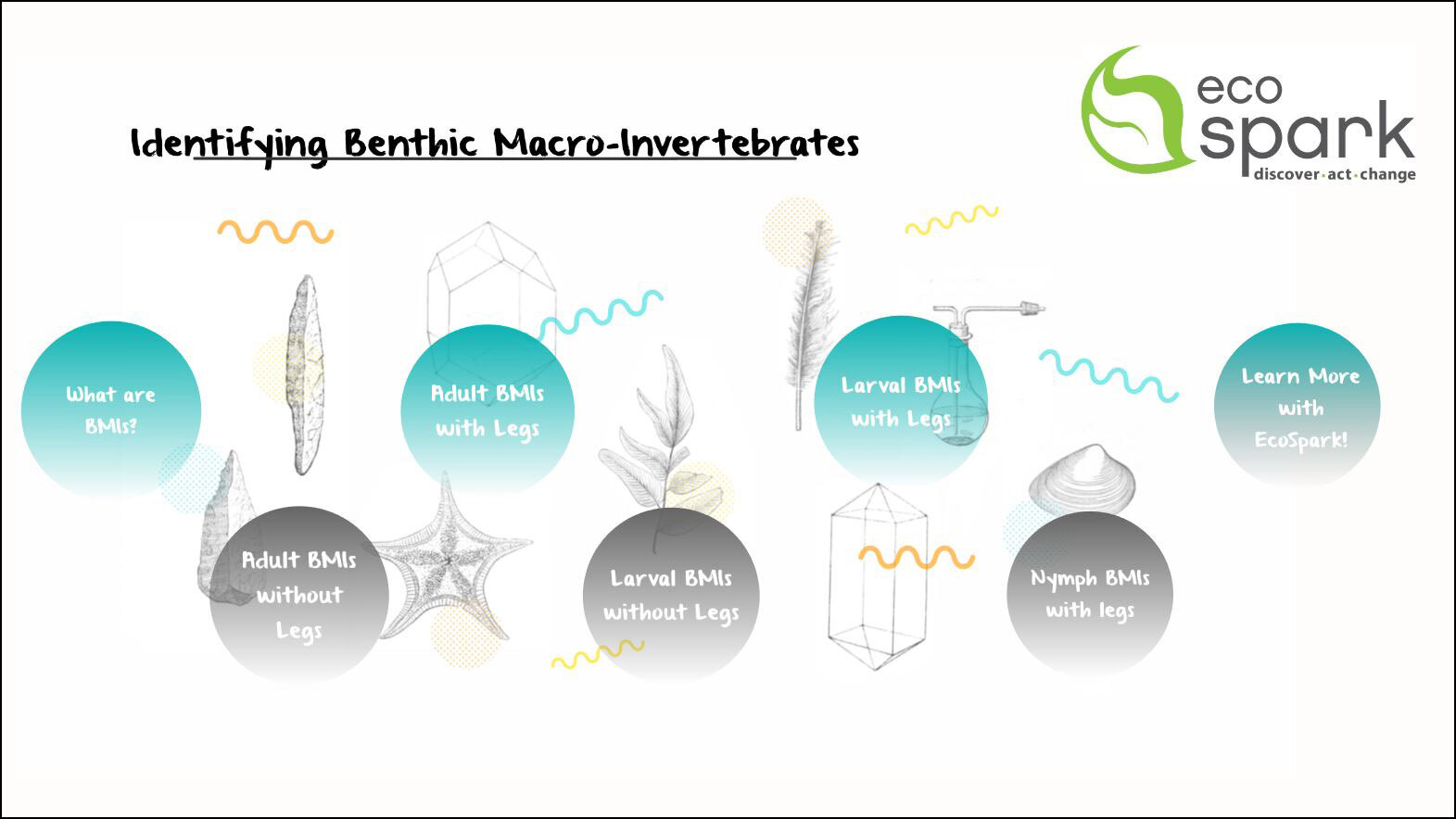
Identifying Benthic Macroinvertebrates
A presentation to aid students in identifying all 27 benthic groups of organisms they might encounter during a stream study.

Manual Data Analysis Worksheet
Using the data collected from a stream study, this resource supports participants to do the final analysis. Was the stream impaired, potentially impaired, or unimpaired? Use this data analysis worksheet to manually calculate the water quality of a study site.
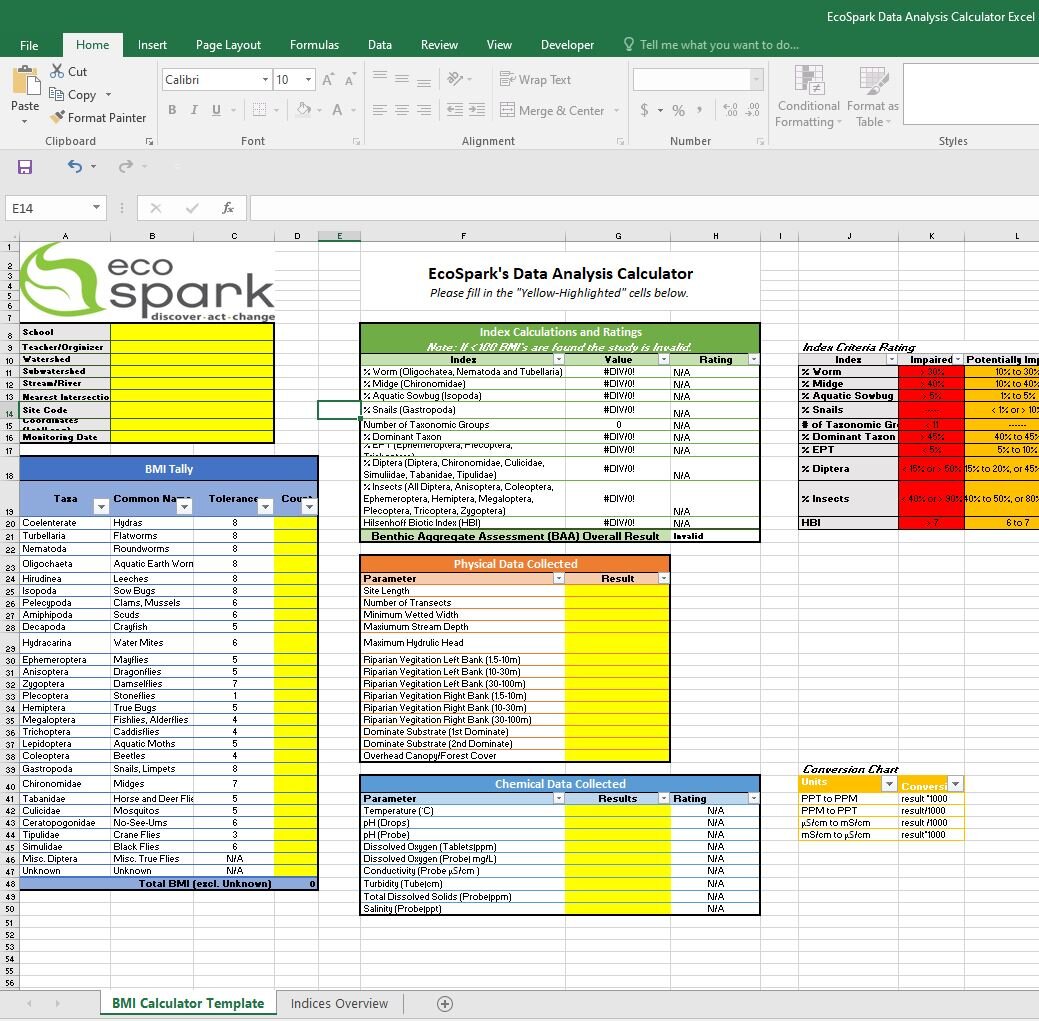
Following a stream study, input the physical site data, chemical data and benthic data into the BMI Data Analysis Calculator to generate an assessment using two benthic macroinvertebrate indices to learn more about the health of the stream studied.
Class Projects for Students
Are your students looking for projects to do? Check out the following resources:

Diverting and Collecting Rainwater
Localized Stream Action: Build a rainwater catchment system for your school and decrease the amount of rain water run-off flowing into your city's sewer system.

Changing Habits: Challenge your classmates, family and friends to develop healthy-stream habits to protect local waterways.
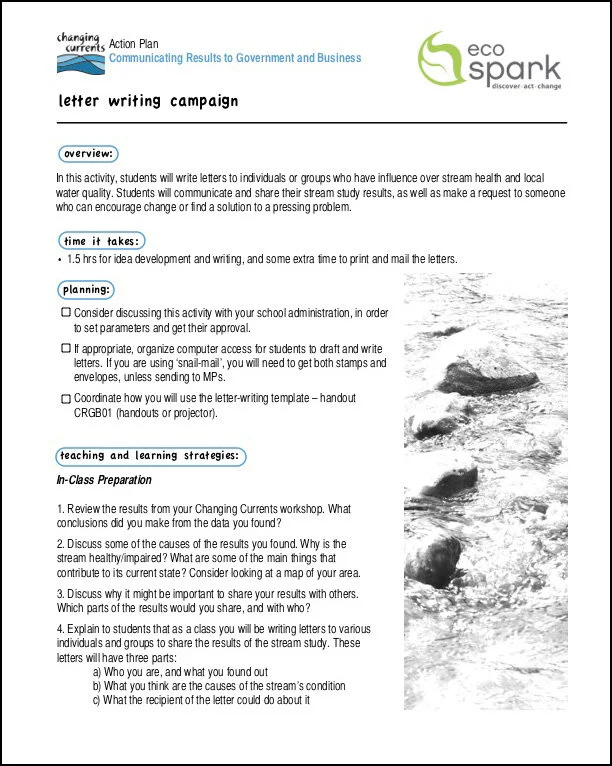
Communicating Results to Government and Business: Craft compelling letters to send to government officials and businesses who can make positive changes and/or decisions to improve the health of your local stream.

Press Releases and Newspaper Articles
School & Community Education: Learn how to Inform your community about what you’ve learned about the health of local ecosystems.
Additional Resources
The following publications provide a wealth of information for further environmental learning and related activities.


Sustainable Development Goals (SDGs)
Learn how EcoSpark’s programs align with the United Nations Sustainable Development Goals.
Trees of the Oak Ridges Moraine
Learn how to identify the most commonly found trees on the Oak Ridges Moraine.
A guide from the Toronto Zoo Ways of Knowing Partnership Turtle Island Conservation Programme
In 2010, EcoSpark partnered with the Toronto District School Board to develop Our Solar Future, a program to connect school solar panels with elementary student learning.

An energy conservation guide for teachers with contextual information, instruction, suggestions and handouts to support a successful electricity conservation project with energy meters.
Guidelines for Excellence: Educating on Climate Action and Justice
A resource from the North American Association of Environmental Educators with evidence-based techniques for teacher about climate action and justice.